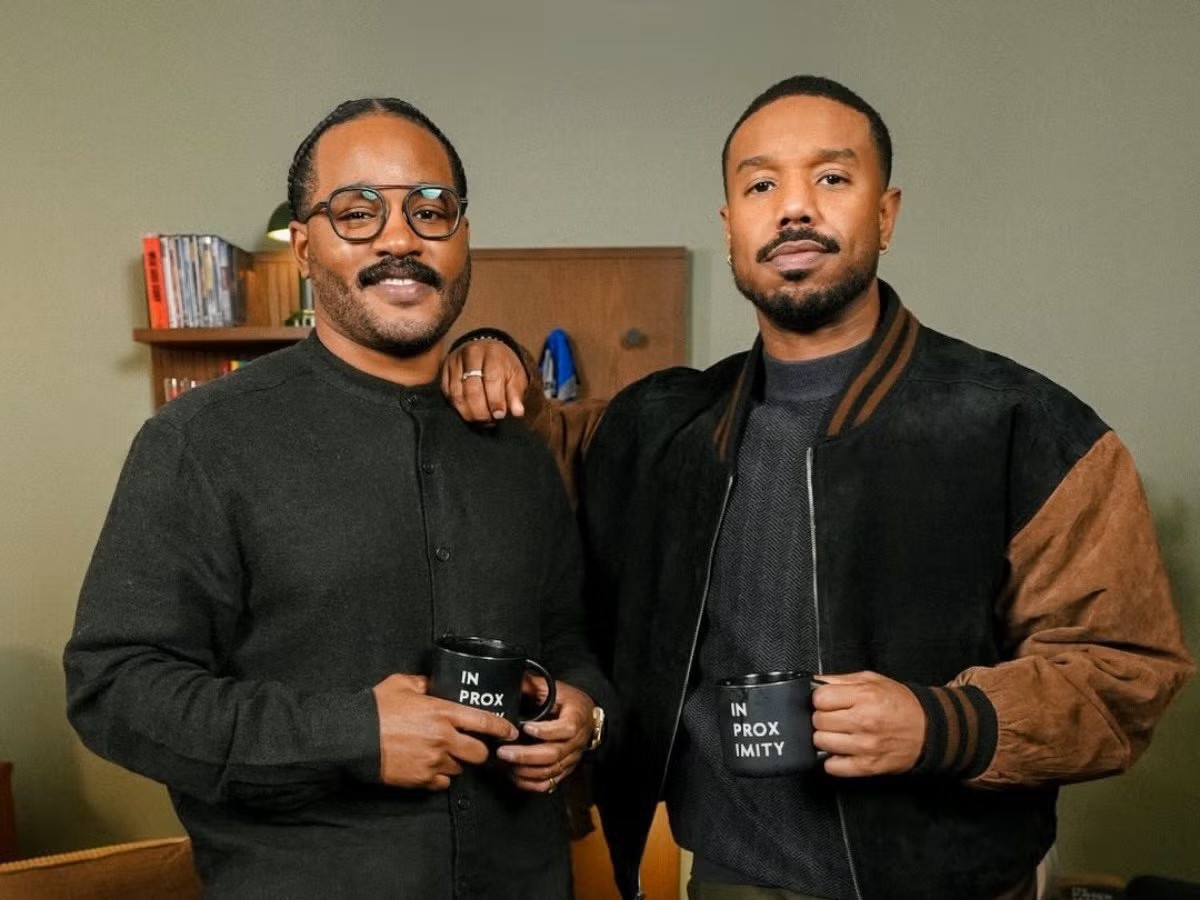
In the newest episode of Proximity Media’s In Proximity podcast, SINNERS Oscar-nominated director, writer, and producer Ryan Coogler joins Oscar-nominated actor Michael B. Jordan in a part-masterclass, part-reunion behind-the-scenes moment, offering a rare look at one of the most dynamic director-actor partnerships in film today.
At the center of this episode, Ryan Coogler and Michael B. Jordan dive deep into their creative shorthand and the meticulous craftsmanship behind the film and some never-before talked about backstories for Smoke and Stack. Coogler breaks down his spreadsheet-driven world-building, mapping timelines, ages, and the parallel-yet-divergent lives of Smoke and Stack. Jordan reveals his transformational process, from keeping separate journals for each twin to developing distinct vocal octaves rooted in childhood trauma, using chakra work to decide which brother films first, and building specific phrases and vocal cues to instantly shift between characters.

Key moments from the Michael B Jordan Episode (transcript excerpts below)
[00:24:05] Ryan Coogler on his obsession with Sinners’ timeline and age led him to meticulously map character histories and divergences in a detailed spreadsheet
[00:49:40] Michael B. Jordan on his meticulous approach to Smoke and Stack, explaining how he worked with dialect coach Beth McGuire to create distinct vocal octaves shaped by childhood trauma, drawing Smoke’s voice from frankensteined late-1930s recordings and Stack’s from an older Southern woman, with clips shown in the episode that allowed him to seamlessly slip back into each character.
[00:33:19] Ryan Coogler and Michael B. Jordan on building the twins’ backstory and leaning into darkness, with Coogler, drawn to characters hungry for power, love, and survival.
[00:24:05] Ryan Coogler on his obsession with SINNERS’ timeline and age led him to meticulously map character histories and divergences in a detailed spreadsheet
[00:24:05] Coogler: “Yeah. For me, working on a script as a writer, it was a lot of math happening, like just figuring out how old these guys were. That was the thing. And it’s interesting because with actors, a lot of times actors, especially movie stars that we know, a quality of them is that they kind of can be ageless…Pick that actor that you’ve been seeing in a long time, It becomes hard to place them and you realize it was kind of always hard to place them…And I knew that the movie would have to be somewhere around the 30s, because that’s kind of the era of blues music I was interested in…And then I knew that these guys would be World War I veterans. And so World War I happened at a specific time. And the US’s entry into the war was also in a very tight amount of time, and because they were black, it was a few all black regimens that … So then it became like, how old were they when … So you kind of work backwards and forwards at the same time, and try to make some decisions based off of the dynamics as a writer…I made a little spreadsheet for Mike to show him where they were and what happened and how I went down. And the big thing for me was … And Mike really interpreted this through his performance, who did what for the other person was really like in many ways, kind of like what defined the actions that you see in the movie.”
[00:49:40] Michael B. Jordan on his meticulous approach to Smoke and Stack, explaining how he worked with dialect coach Beth McGuire to create distinct vocal octaves shaped by childhood trauma, drawing Smoke’s voice from frankensteined late-1930s recordings and Stack’s from an older Southern woman, with clips shown in the episode that allowed him to seamlessly slip back into each character.
[00:49:40] MBJ: Key phrase is like a phrase that you would use to help you, your muscle memory of your voice and your vocal chords to get into register, It to a cadence of my character. So for smoke, we started finding late 30s audio, and there was a few videos in the, I want to say from like the 50s, the 60s that we kind of used because we were blending these, it’s really hard to find like dialect from that era, you know what I’m saying? Enough for me to really latch onto. So we kind of Frankenstein some to make it feel of that generation and [for] Stack, I found this older Southern woman, so yeah, they used some key phrases and she was talking about flowers and that felt very Stack, you know what I’m saying?…So I used those to kind of like just kind of have in my head that I would listen to as I’m switching from one twin to the other or in between takes and stuff…
[00:33:19] Ryan Coogler and Michael B. Jordan on building the twins’ backstory and leaning into darkness, with Coogler, drawn to characters hungry for power, love, and survival
[00:33:19] Coogler: But they killed their father. Hid out at Mary’s mom’s place. Then went to New York and joined the military. Went to fight in France, came back, and they went back home for a little bit. While they were at home… Mary was older. So that was when Stack and Mary happened…because she was like a younger sister to them, Smoke and Mary’s mom didn’t love that. It was like a three-year run where the twins had basically broke up. Where Smoke and Annie got their house and Stack and Mary went to Little Rock…And when [Smoke and Annie] lost their daughter was when things got rocky. And then that was where they both basically left their partners [and went to Chicago]…
[00:34:56] MBJ: “[Meeting Capone and getting the Irish beer and Italian wine is] a little loose, you know what I’m saying? But the key things from that experience for me, for Smoke and Stack, was they were doing jobs…that Capone didn’t want to do themselves because they would know it was from Capone. ‘But if I use these guys from out of town and they twins’, you know what I’m saying? It’s like a peculiar thing that nobody’s going to trace it back to him. So amongst that, they started to figure out who the major players were, Italians, the Hans, this, that, you hear them talking through the different types of gangsters that was running Chicago and they figured out how to take advantage of the situation and get out of here and go start [their] own shit. And nobody’s going to think it’s them. They’re going to think it’s each other.
[00:58:05] Coogler: And the other part about it too is like, these are very bad men, you know what I mean? That’s the part, like they murderers, they robbers, they stacks of pimp, you know what I mean? You see these dudes cross the street, but yet still, you know what I mean? They’re still human beings. There is still like a depth to that humanity and an innocence that’s been lost a long time ago, but it’s still remnants of it. And so that part of it was really exciting for us to play with Mike, because he is an actor who, you know, I think like a Tom Hanks, you know what I mean? Where you put him on camera, you going to like him, you know what I’m saying? He has that part of you going to give him the benefit of the doubt. So it was like, yo, how bad can we make these dudes? Let’s test that. Let’s really put it to the test and see what happens, you know what I mean? Not just see in their backstory, but actually see them do it. Physically. Yeah. You see Stacks lying constantly. He sends this woman that he loves, he sends her out to go, you know what I mean? And to go live this other life. Yeah. Smoke kills a bunch of … Murders a bunch of money.
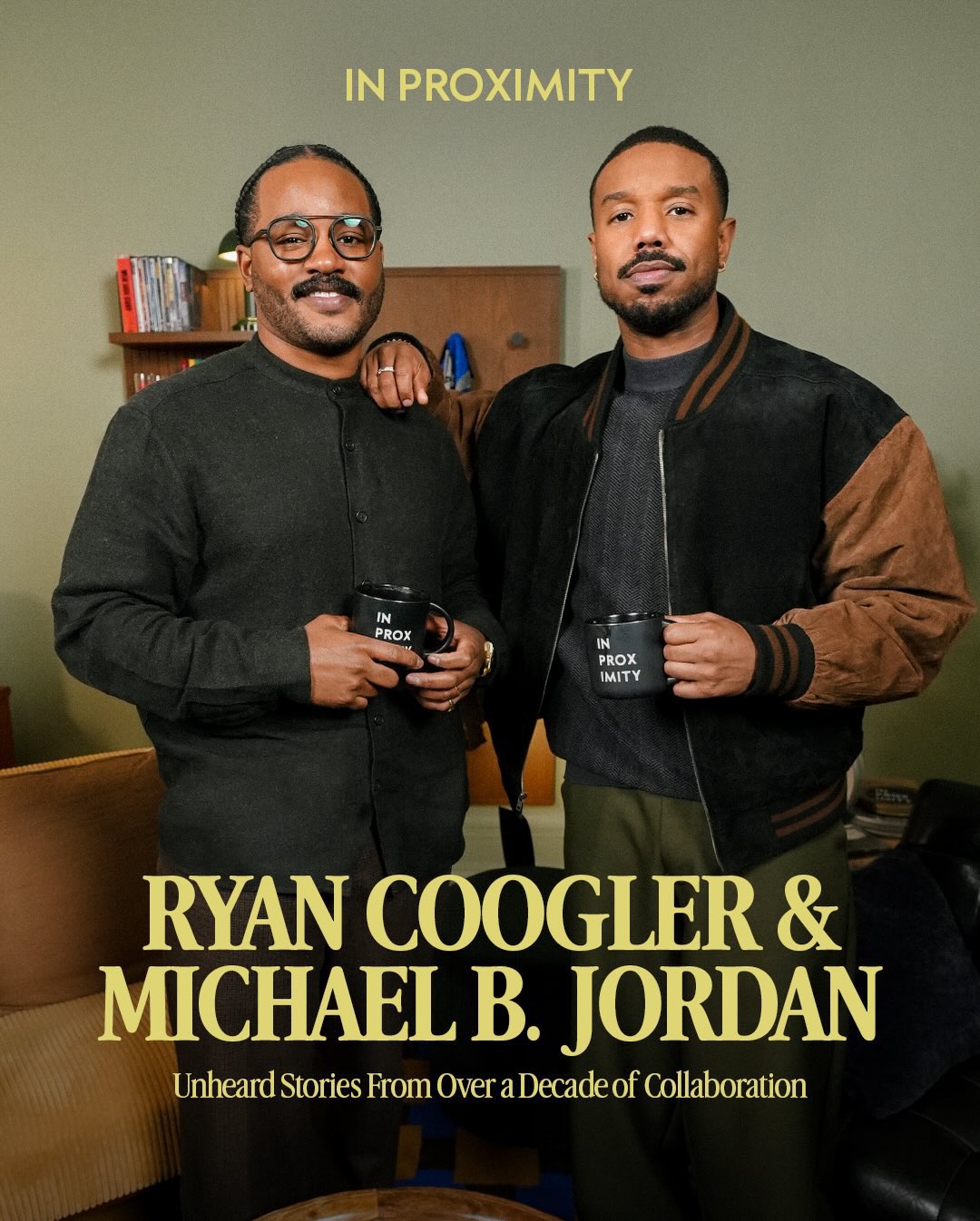
Images Courtesy of ‘In Proximity’
The post Michael B. Jordan and Ryan Coogler Reunite to Discuss the Meticulous Crafting of SINNERS’ Smoke and Stack appeared first on Talking With Tami.
from Talking With Tami https://ift.tt/4KVQkX8




0 Comments